
A plain high-carbon steel (AISI 1095) with about 0.95% carbon. After hardening it reaches very high hardness and wear resistance, so it is used for springs, blades, knives and saws where cost matters and corrosion is not a concern.
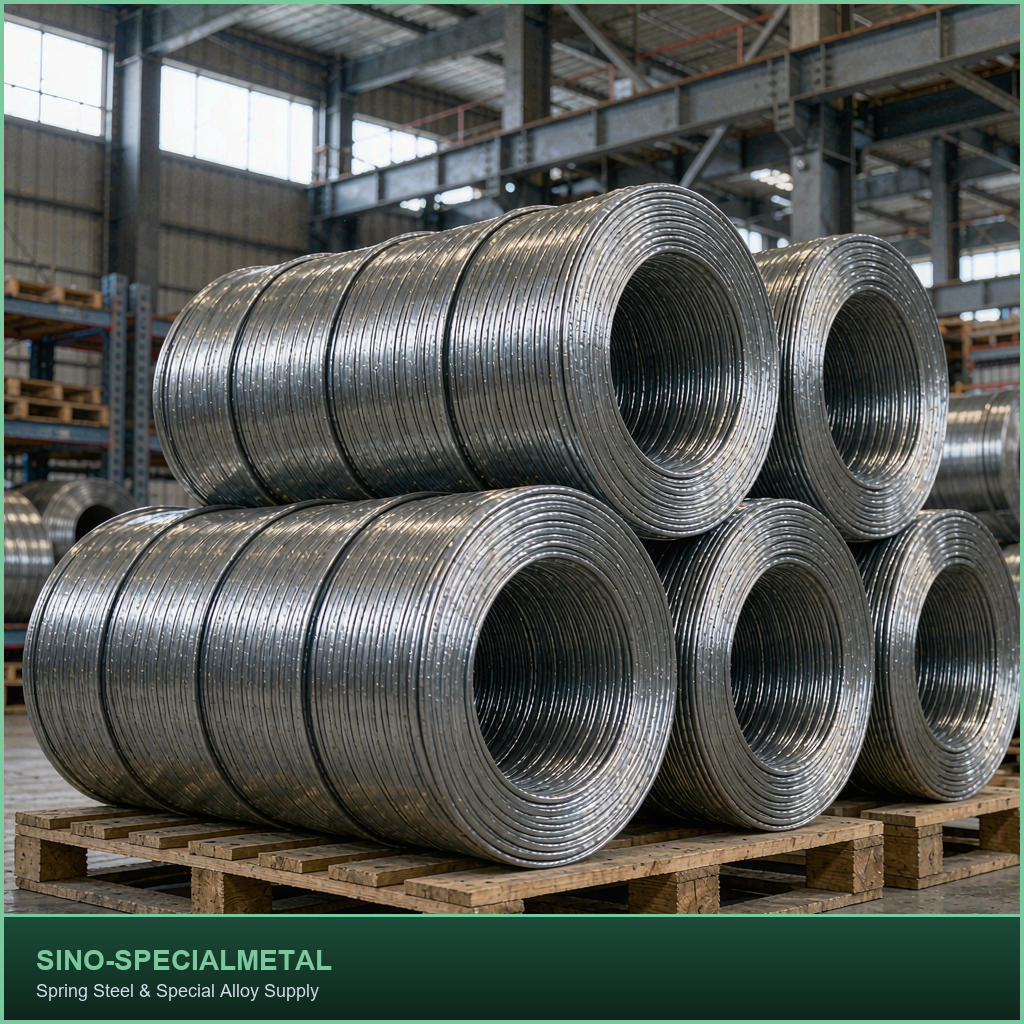
What Is 1095 Carbon Spring Steel?
1095 is a plain-carbon steel at the top of the 10xx range. The ~0.95% carbon gives it the hardness and edge retention of a tool steel at a fraction of the alloy cost — but it is brittle and must be heat treated carefully.
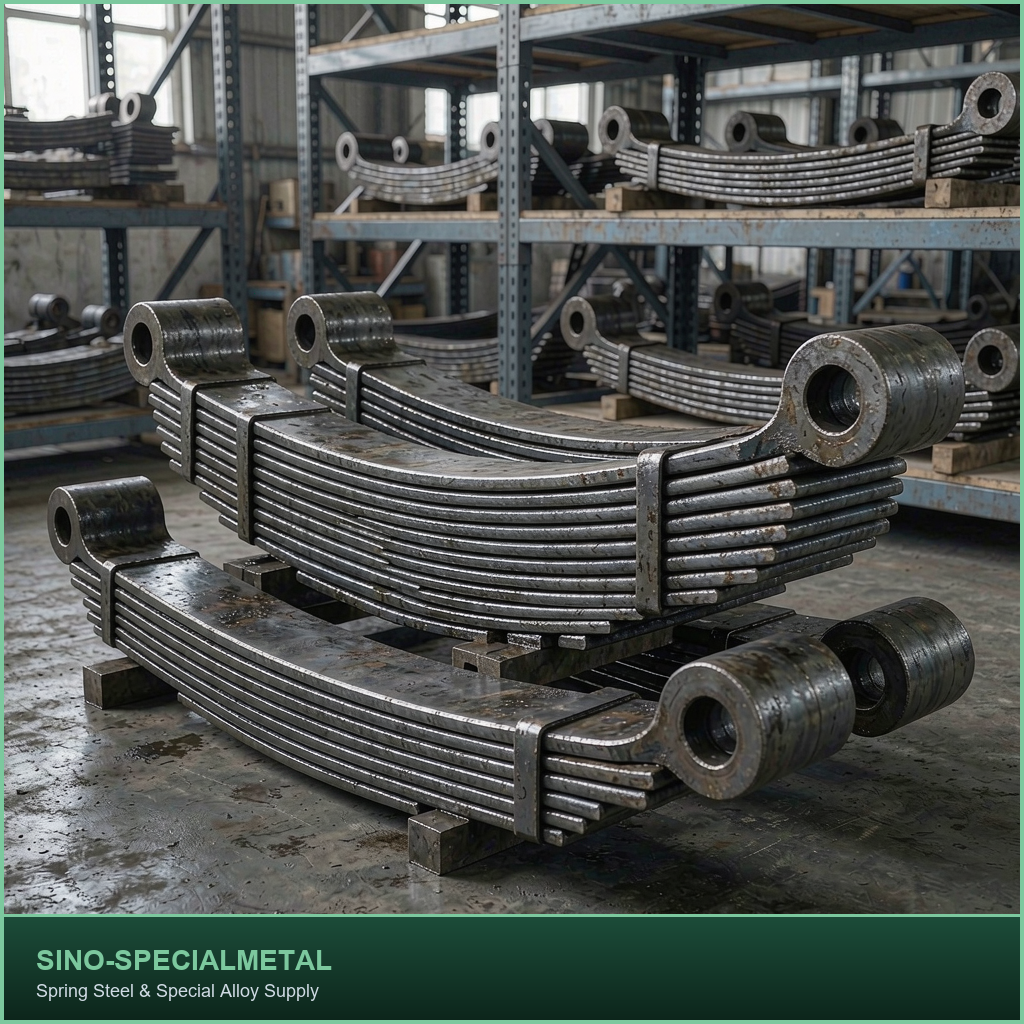
It is used for band saw blades, knives, scrapers and small springs where a hard, cheap steel is enough. It is not stainless and rusts readily, so finish and storage matter.
Supply Forms and Sizes
Every form is available soft-annealed (for further forming and machining) or heat-treated to your hardness window.
| Form | Condition | Size Range | Typical Use |
|---|---|---|---|
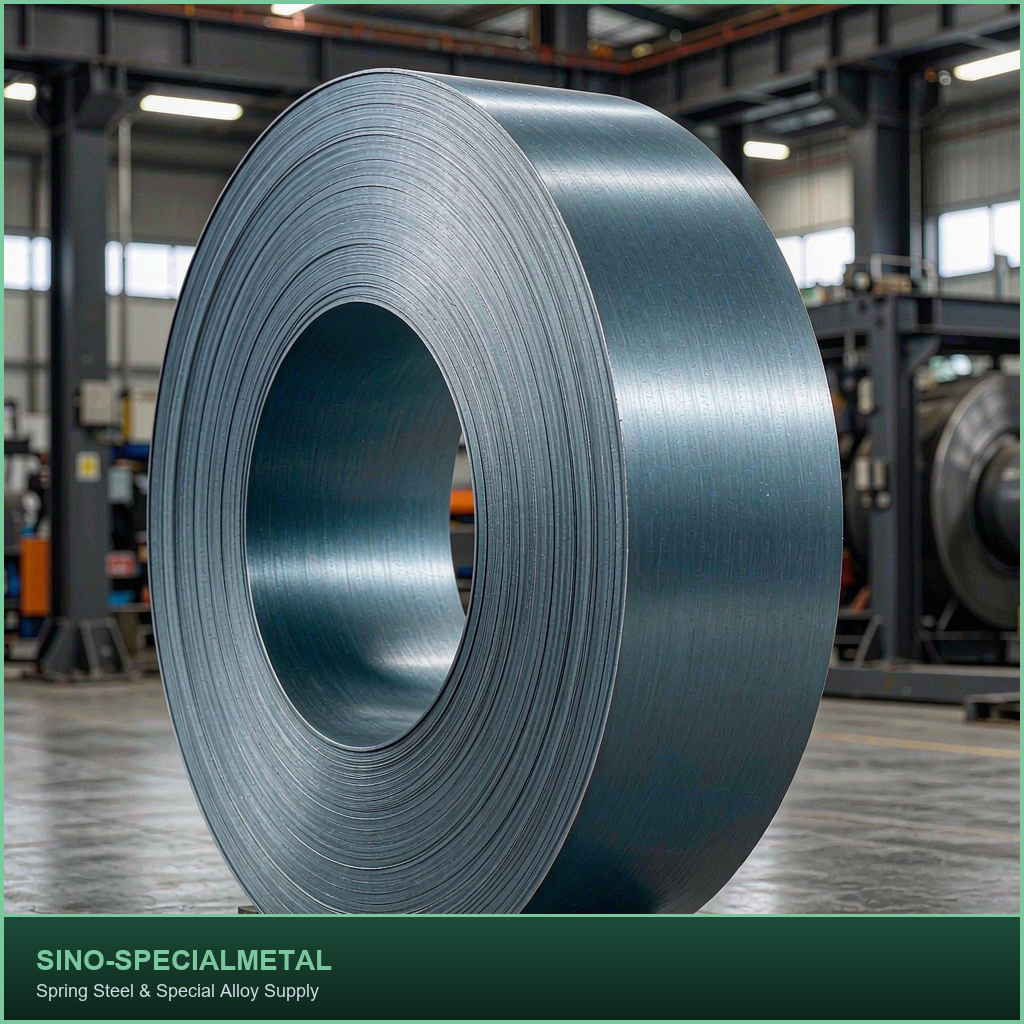
| Cold-rolled strip | Annealed / hardened | 0.1 – 6 mm | Blades, springs, washers |
| Hot-rolled bar | Hot rolled / annealed | 6 – 80 mm | Knives, tools, springs |
| Hardened & tempered strip | Q&T | 0.2 – 3 mm | Small flat springs |
| Wire | Annealed / spring temper | 0.5 – 8 mm | Small coil springs |
Chemical Composition (AISI 1095)
| C | Mn | Si | P max | S max |
|---|---|---|---|---|
| 0.90 – 1.03 | 0.30 – 0.50 | 0.10 – 0.30 | 0.040 | 0.050 |
Heat analysis is reported on the mill certificate for every lot. If your drawing calls for tighter limits than the standard, flag it at enquiry — ladle-refined heats usually meet it without a surcharge.
Physical Properties
| Property | Value |
|---|---|
| Density | 7.85 g/cm³ |
| Elastic modulus (E) | ~200 GPa |
| Shear modulus (G) | ~79 GPa |
| Thermal conductivity | ~40 W/m·K at room temperature |
| Coefficient of thermal expansion | ~12 ×10⁻₆ /K (20 – 200 °C) |
Mechanical Properties
Typical values after hardening and tempering. AISI 1095 is normally used in the hardened-and-tempered condition; the mill certificate is the binding document.
| Condition | Hardness | Tensile Strength | Notes |
|---|---|---|---|
| Annealed | ≤ 229 HB | ~580 – 700 MPa | For machining |
| Q&T 55 HRC | 54 – 56 HRC | ~1300 MPa | Blades, springs |
| Q&T 60 HRC | 58 – 62 HRC | ~1500 MPa | Max wear / edge |
Equivalent Grades
| Standard | Designation |
|---|---|
| USA AISI | 1095 |
| Europe EN | C90S / 1C90 (similar) |
| Japan JIS G4401 | SK5 (similar) |
| China GB/T 699 | 95 steel (similar) |
Heat Treatment and Processing
Preheat slowly, then raise to the grade forging range. Work above the lower limit and cool slowly after forging to avoid cracks.
790 – 810 °C, soak, slow furnace cool. Soft condition for machining and forming.
760 – 780 °C, water for thin sections / oil for small bar. High carbon cracks easily — preheat and quench promptly.
150 – 400 °C by required hardness; light tempers keep peak hardness, higher temp trades hardness for less brittleness.
After machining or forming, 200 – 350 °C for 1 – 2 hours, air cool, to stabilise dimensions and relieve residual stress.
Heat-treated bars and plates are supplied with the hardness and test certificate you specify. For critical parts we can control decarburisation depth and supply a spheroidized or soft-annealed structure on request.
Applications of 1095 Carbon Spring Steel
High hardness holds a cutting edge through long runs.
Cheap, hard, good edge for non-corrosive duty.
Where a hard, cheap spring is acceptable.
Hardened strip for high-pressure joints.
Low-cost drilling where wear is moderate.
Thin strip with tight thickness tolerance.
1095 Carbon Spring Steel vs Alternative Grades
| Grade | vs 1095 Carbon Spring Steel | Choose It When |
|---|---|---|
| 1095 | — | Cheap, very hard, brittle; non-corrosive-duty blades and springs. |
| 65Mn | Manganese lifts hardenability and toughness | Springs that must survive fatigue |
| O1 | Oil-hardening tool steel, more alloy | When lower distortion in heat treat matters |
| 5160 | Adds Cr for hardenability | Larger springs needing uniform hardness |
Quality Control and Mill Certificates
Every shipment ships with an EN 10204 3.1 mill certificate covering heat chemical analysis, hardness and the mechanical test on record. On request we add: ultrasonic test on heavy bar and plate, magnetic particle inspection on machined surfaces, and third-party inspection (SGS / BV) before loading. Dimensional tolerances follow the relevant EN / ASTM / JIS standard or your drawing.
Frequently Asked Questions
What is 1095 steel used for?
High-carbon blades, band saws, knives, scrapers and small hard springs where cost matters and corrosion is not a concern.
What hardness does 1095 reach?
Typically 55 – 62 HRC after hardening and tempering; thin sections reach the top of that range.
Is 1095 stainless?
No. It rusts readily and must be oiled, coated or kept dry.
1095 vs 65Mn?
1095 is plain high-carbon and harder but more brittle; 65Mn’s manganese gives better hardenability and fatigue for springs.
What is the minimum order quantity?
Mill lots typically start at 500 kg per item; trial strip and bar are often from stock.
Related Products
Send your form, size, condition, quantity and destination port. You will get a firm price and lead time within one working day.