
Cobalt-alloyed high-speed steels for cutting tools that keep a working edge at 600 °C and above — full composition, red-hardness data and supply forms for M42 and M35.
High-Speed Steel Grades We Supply
Every grade below is stocked or produced on mill lots with an EN 10204 3.1 certificate. Click any grade for its full chemical composition, mechanical properties, heat-treatment windows and equivalent standards.
| Grade | Standard / UNS | Typical Hardness | Key Character | Details |
|---|---|---|---|---|
| M42 High-Speed Steel | AISI M42 / UNS T11342 | 66 – 70 HRC | 8% cobalt; the highest red hardness, for hardened-alloy and aerospace cutting | View grade → |
| M35 High-Speed Steel | AISI M35 / UNS T11335 | 64 – 67 HRC | 5% cobalt; balanced cost and performance for drills, taps and saws | View grade → |
Grade Overview
The premium cobalt HSS. Drills, taps and end mills that cut hardened steels, titanium and high-temperature alloys while holding 66–70 HRC at the edge.
The workhorse cobalt HSS. Significantly longer tool life than plain M2 in stainless and alloy machining, at a lower cost than M42.
What Is High-Speed Steel?
High-speed steels (HSS) are tungsten- and molybdenum-alloyed tool steels that retain their hardness at the elevated temperatures of high-speed machining. Cobalt additions push that red hardness further — which is why M35 (5% Co) and M42 (8% Co) are the grades specified for demanding cutting tools.
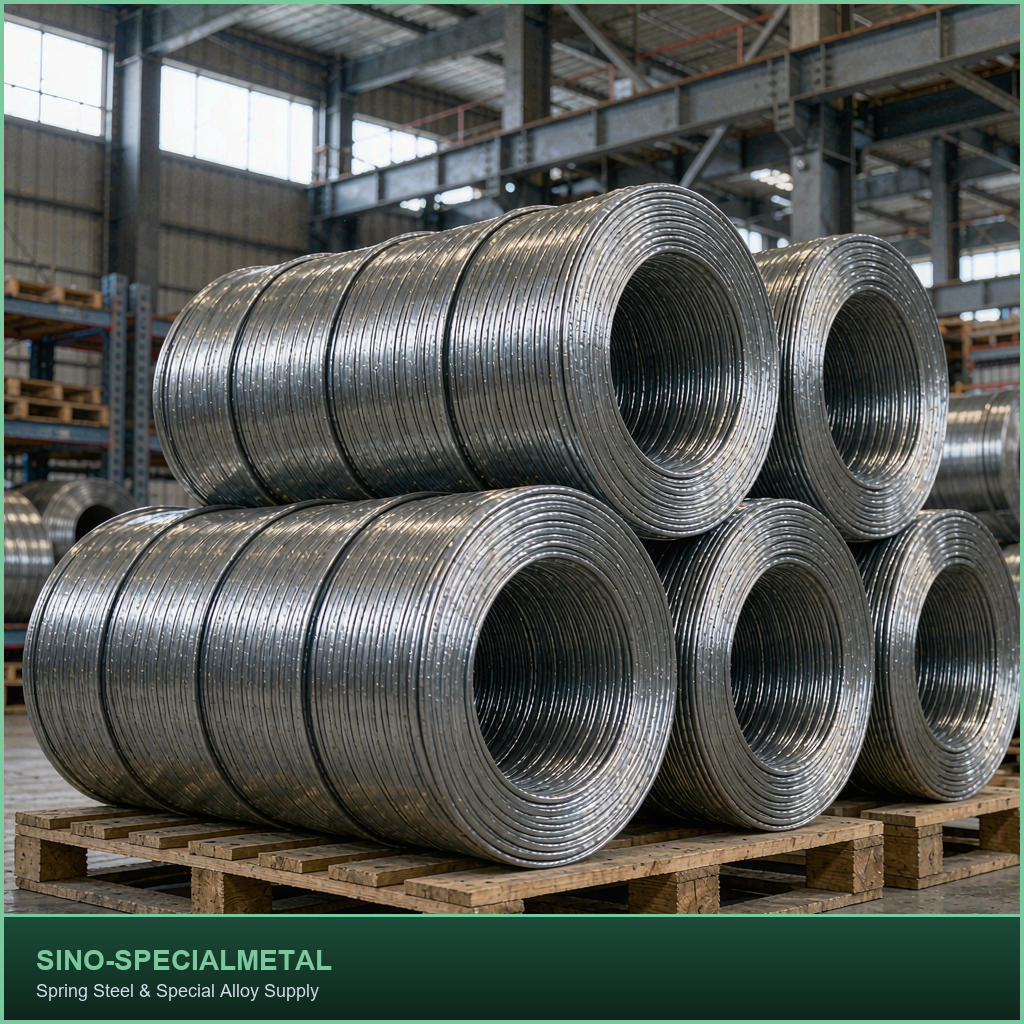
We supply both grades as round bar, ground bar, wire and strip, in annealed condition for tool manufacturers or finished-hardened on request. Melting is by EAF + ESR for the clean carbide distribution that fine tool edges need.
Typical applications include drills, taps, reamers, end mills, saw blades, broaches and form tools — especially where the workpiece is itself a hardened alloy or stainless steel.
How to Choose the Right Grade
Match cobalt content to cutting severity. M35 (5% Co, 64–67 HRC) covers most drills, taps and saws with a better price point. Move to M42 (8% Co, 66–70 HRC) when the tool must cut hardened steel above 40 HRC, aerospace alloys or stainless at high speed — the extra cobalt buys noticeably longer tool life. If your current tools fail by softening at the edge, step up a cobalt grade; if they chip, the geometry or grade toughness needs review — send us the application.
Quality Control and Mill Certificates
Every shipment ships with an EN 10204 3.1 mill certificate covering heat chemical analysis, hardness and the mechanical test on record. On request we add: ultrasonic test on heavy bar and plate, magnetic particle inspection on machined surfaces, and third-party inspection (SGS / BV) before loading. Dimensional tolerances follow the relevant EN / ASTM / JIS standard or your drawing.
Frequently Asked Questions
M42 vs M35: which should I specify?
M35 (5% Co) suits most drill, tap and saw applications and costs less. Specify M42 (8% Co) when cutting hardened steels above about 40 HRC, titanium or high-temperature alloys, or when edge softening is the failure mode you see today.
What hardness does M42 reach after heat treatment?
After quenching near 1,190 °C and triple tempering near 540 °C, M42 reaches 66–70 HRC and retains cutting hardness up to about 620 °C.
Do you supply HSS in wire and strip?
Yes. Both grades are available as drawn wire (for drills and taps) and cold-rolled strip (for saw and band-saw teeth) in addition to round and ground bar.
Related Pages
Send your grade, form, size, quantity and destination port. You will get a firm price and lead time within one working day.