
An indexed overview of every tool steel grade we manufacture and export — cold-work, hot-work, shock-resisting and plastic-mold steels with UNS / AISI / JIS equivalents, typical hardness and direct links to full data sheets.
Tool Steel Grades We Supply
Every grade below is stocked or produced on mill lots with an EN 10204 3.1 certificate. Click any grade for its full chemical composition, mechanical properties, heat-treatment windows and equivalent standards.
| Grade | Standard / UNS | Typical Hardness | Key Character | Details |
|---|---|---|---|---|
| A2 Tool Steel | AISI A2 / UNS T30102 | 57 – 62 HRC | Air-hardening; balanced wear resistance and toughness with minimal distortion | View grade → |
| D2 Tool Steel | AISI D2 / UNS T30402 | 58 – 62 HRC | High-carbon 12% Cr; maximum abrasion resistance for cold-work dies | View grade → |
| H13 Tool Steel | AISI H13 / UNS T20813 | 42 – 52 HRC | Hot-work steel; resists thermal fatigue and heat checking | View grade → |
| O1 Tool Steel | AISI O1 / UNS T31502 | 57 – 65 HRC | Oil-hardening; easy to machine and heat treat, stable size | View grade → |
| M2 Tool Steel | AISI M2 / UNS T11302 | 62 – 65 HRC | Molybdenum high-speed steel; good red hardness for cutting tools | View grade → |
| S7 Tool Steel | AISI S7 / UNS T41907 | 54 – 58 HRC | Shock-resisting; the toughest tool steel for impact work | View grade → |
| DC53 Tool Steel | JIS SKD11-Improved (DC53) | 60 – 62 HRC | Twice the toughness of D2; better machinability and less retained stress | View grade → |
| P20 Plastic Mold Steel | 35CrMo7 / 1.2311 | 28 – 35 HRC pre-hardened | Supplied pre-hardened; machine directly without re-heat treatment | View grade → |
Grade Overview
The general-purpose air-hardening cold-work steel. Distortion-free hardening makes it ideal for gauges, punches and forming dies that must hold tolerance.
View full data sheet →The classic high-wear cold-work steel for blanking and forming dies, cutting blades and threading dies working abrasive sheet and strip.
View full data sheet →The world standard die-casting and forging die steel. Vanadium-refined structure survives thousands of thermal cycles in aluminium dies and hot shear blades.
View full data sheet →The economical general-purpose oil-hardening grade for gauges, cams, guides and small dies where air hardening is not required.
View full data sheet →The most widely used HSS. Drills, taps, end mills, saw blades and lathe tools that keep their edge at cutting temperatures up to 550 °C.
View full data sheet →Air-hardening and uniquely tough. Chisels, punches, riveting tools, shear blades and plastic mold tools that take repeated impact without chipping.
View full data sheet →The modern cold-work upgrade over D2/SKD11. Precision punches, IC trim dies and deep-drawing dies where D2 cracks but D2-level wear resistance is still needed.
View full data sheet →The default large plastic-mold steel. Delivered pre-hardened so mold bases and cavities are machined and put to work with no hardening distortion.
View full data sheet →What Is Tool Steel?
Tool steels are carbon and alloy steels designed for making tools, dies and moulds. They combine high hardness with wear resistance and sufficient toughness, and most of them are supplied soft-annealed and hardened by the customer after machining.
Our tool steel portfolio covers the four working families: cold-work steels (A2, D2, DC53, O1), hot-work steel (H13), shock-resisting steel (S7), high-speed steel (M2) and the pre-hardened plastic mold steel P20. All grades are melted by EAF + LF + (VD) and supplied with full traceability.
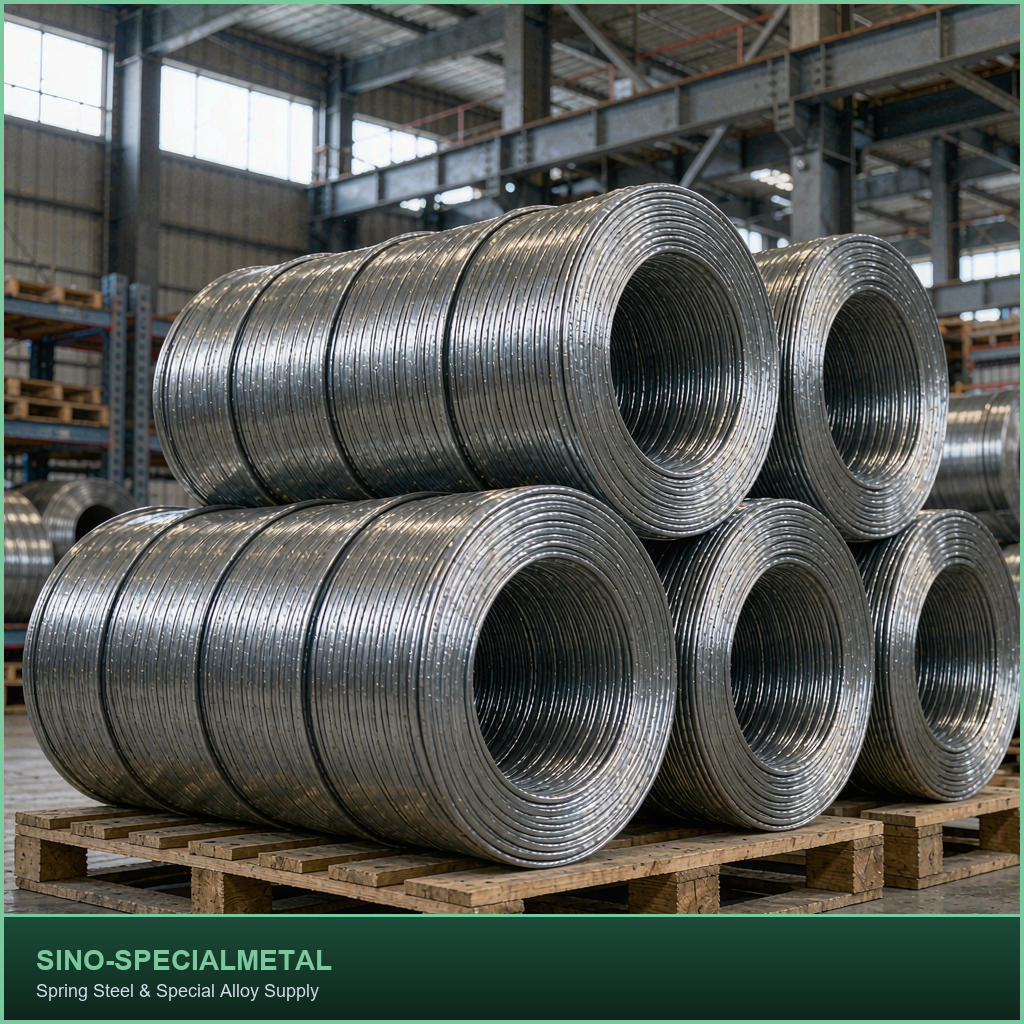
Common supply forms are round bar, flat bar, plate, block and wire, from 10 mm to 300 mm in bar diameter and 6 mm to 200 mm in plate thickness, in annealed or pre-hardened condition.
How to Choose the Right Grade
Start from the failure mode you must avoid. Maximum wear resistance on abrasive cold work points to D2 or DC53; balanced wear and toughness with minimal heat-treat distortion points to A2; thermal cycling in die casting or forging calls for H13; impact loading calls for S7; precision cutting tools call for M2; and large plastic molds that must be machined before hardening are the home ground of pre-hardened P20. When two grades look close, send us the part drawing and working conditions — we will recommend one grade and quote both.
Quality Control and Mill Certificates
Every shipment ships with an EN 10204 3.1 mill certificate covering heat chemical analysis, hardness and the mechanical test on record. On request we add: ultrasonic test on heavy bar and plate, magnetic particle inspection on machined surfaces, and third-party inspection (SGS / BV) before loading. Dimensional tolerances follow the relevant EN / ASTM / JIS standard or your drawing.
Frequently Asked Questions
Which tool steel should I choose for cold-work dies?
For maximum wear resistance choose D2 or DC53; for a balanced mix of wear resistance and toughness with less distortion choose A2; for forming tools that take impact choose S7. Send us the die drawing and strip material for a firm recommendation.
What is the difference between D2 and DC53?
DC53 is an improved SKD11-type steel with about twice the toughness of D2, better machinability in the annealed state and lower retained stress after quenching, while keeping a similar 60–62 HRC hardness. It is the usual upgrade where D2 chips or cracks.
Do you supply P20 already hardened?
Yes. P20 is supplied pre-hardened to 28–35 HRC (1.2311 / 1.2312 variants available), ready for direct CNC machining of mold bases and cavities without further heat treatment.
Related Pages
Send your grade, form, size, quantity and destination port. You will get a firm price and lead time within one working day.
Get a Quote